

WordPress can do more than power the marketing site beside your Roku channel. With the right content model and an app-ready feed, it can be the system your team uses to organize the library that viewers see on TV.
That changes the workflow. Instead of entering the same movie or episode into a website CMS and a separate streaming dashboard, your team manages the catalog once in WordPress. The Roku app requests the structured data it needs and turns it into a TV interface.
The basic WordPress-to-Roku flow
The flow has five parts: WordPress holds the content records; MediaBlaster adds media-specific fields and structures; the site exposes app-ready data; the Roku app reads the data; and the publisher tests and submits the packaged app through their own Roku developer account.
This does not mean WordPress streams video by itself. In most setups, the video is delivered by a video host, storage provider, CDN, or live-streaming service. WordPress is the source of truth for the content information and the playback URLs the app needs.
1. Build a content library instead of a pile of uploads
A TV app needs more structure than a page with embedded video. Each item should have a clear content type, title, description, artwork, playback source, visibility state, and place in the browsing experience.
MediaBlaster lets WordPress organize media around app-oriented types such as movies, series, episodes, specials, and podcasts. A series can contain seasons and episodes. Categories, tags, featured placement, and app settings help turn the library into home-screen rows and browse views rather than a long undifferentiated list.
A practical catalog uses stable identifiers and consistent names. Keep season and episode numbering complete, publish the episode record before connecting it to a series where the workflow requires it, and avoid changing identifiers casually once content is available in a public app. Those details become important for navigation, search, updates, and deep links.
2. Add the metadata the Roku interface depends on
The TV interface needs more than a video file. At a minimum, prepare a public title, concise description, content type, playback URL, duration where available, and appropriate poster and background artwork. Series and episodes also need their parent relationship and season or episode order.
Good metadata makes the app easier to browse from a couch. It tells the app what belongs in a row, what opens from a search result, what image to show in different screen contexts, and what should play. It also gives you a better foundation for deep linking, where Roku asks the app to open a particular item.
Treat artwork as part of the content record, not a last-minute asset folder. A vertical poster, a wide background, readable titles, and consistent visual treatment make a small library look intentional. Test assets on a real television because images that look fine on a laptop can be unreadable across a room.
3. Turn WordPress records into app-ready data
A Roku app cannot interpret an ordinary WordPress page the way a human can. It needs structured data: identifiers, titles, images, hierarchy, metadata, and a playback source in a predictable format. MediaBlaster provides the media backend and app configuration layer that makes WordPress content usable by connected app templates.
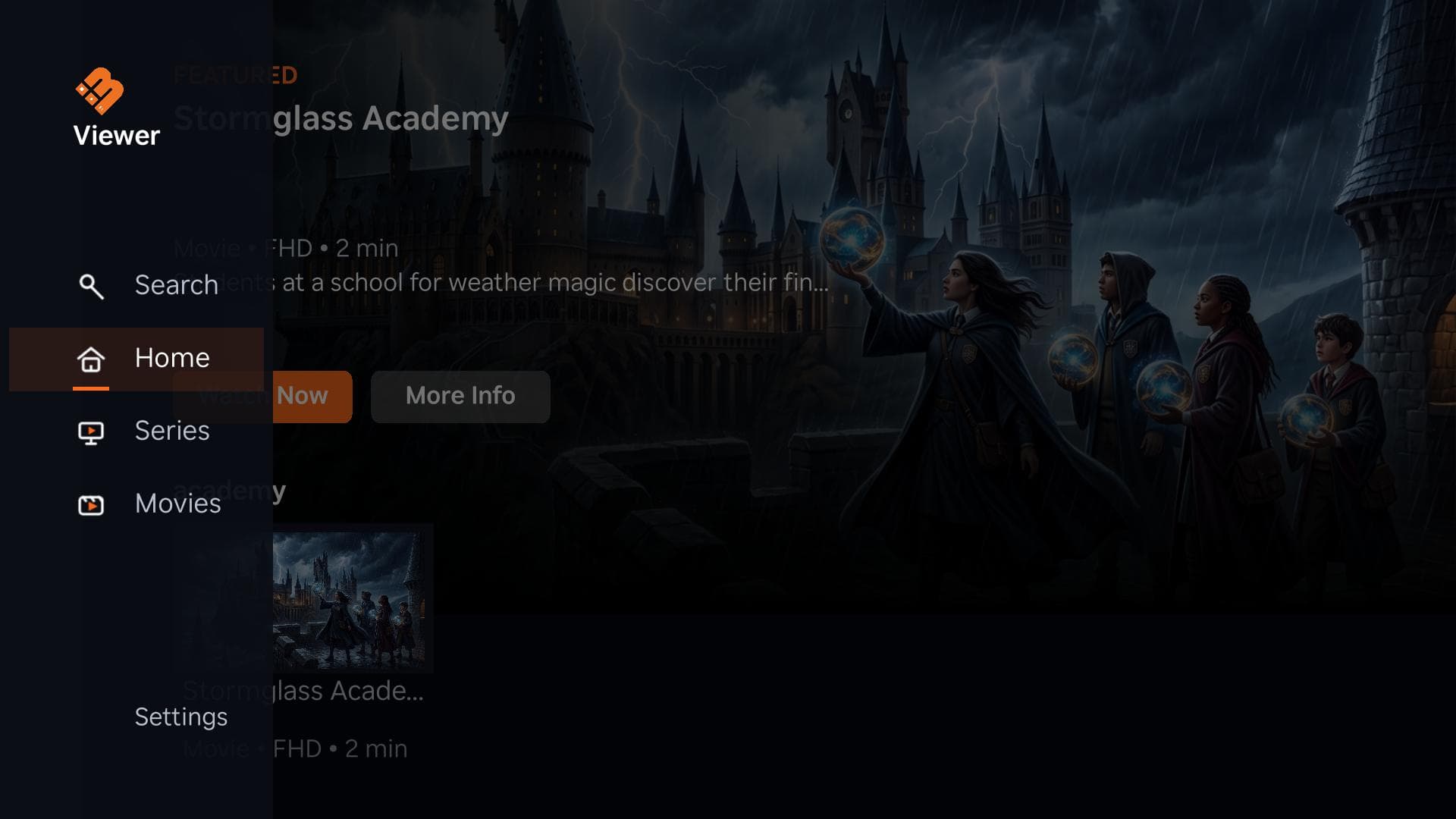
The app requests the relevant catalog and configuration data from the WordPress site, then uses it to populate features such as a featured item, content rows, category browsing, search, and show or episode screens. When you publish a new item or correct its metadata in WordPress, the app can reflect that update without hand-editing each app screen.
This is why the backend needs operational care. Restrict editing access, keep WordPress and plugins maintained, back up the database and uploads, use dependable hosting, and test major content changes before announcing them. A backend problem becomes a TV-app problem the moment viewers cannot browse or play content.
4. Connect the Roku interface
The Roku application is the viewer-facing layer. It contains the navigation patterns, remote-control behavior, screens, artwork layout, loading states, player integration, and the code that reads the WordPress-powered catalog. MediaBlaster’s Roku Launch Kit is a source-code foundation designed to connect to this backend rather than a hosted service that keeps the app inside a vendor account.
In a standard launch, you configure the app with the site connection, then customize the name, logo, colors, copy, navigation labels, artwork, and content sections. The initial Launch Kit focuses on Roku VOD. Do not assume it includes every future platform feature: subscriptions, live TV, EPG, and advanced advertising need to be evaluated as separate requirements.
5. Publish updates through a clear operating process
There are two kinds of updates. Content updates happen in WordPress. Add a new episode, correct a description, update a poster, or place a title in a featured row, then verify the app receives the expected data. App updates change the Roku package itself. These include new screens, altered navigation logic, code changes, updated dependencies, or behavior that affects certification.
Keeping those paths separate makes the channel easier to operate. Your content team can work in WordPress without learning BrightScript. Technical changes can follow a test, package, and submission workflow. Use a staging site or limited beta distribution for meaningful changes when possible.
Hosting and delivery responsibilities
WordPress hosting serves the backend and its API responses. Video hosting or storage serves the actual media files. A CDN may improve delivery for either part. Your provider choices should fit the catalog size, traffic, security requirements, content rights, and expected playback load.
The app does not remove these responsibilities. It makes the workflow more coherent. You own the WordPress content backend, choose the delivery providers, and publish the Roku app through your developer account. That is a stronger fit for teams that value control, but it also means someone must own routine operations.
A practical launch checklist
Start with a small, complete catalog. Create the content types you need. Add descriptions, posters, background art, categories, series relationships, and playback URLs. Confirm the MediaBlaster backend returns the expected data. Connect the Roku app, customize the brand elements, test browsing and playback on hardware, then package and prepare the public submission.
For a fuller walkthrough, see how MediaBlaster works. The Series and Episodes documentation is also useful when your channel needs organized seasons and episode browsing.
Frequently asked questions
Can WordPress be a Roku app backend?
Yes. WordPress can hold and expose the structured catalog data a custom Roku app needs. MediaBlaster adds a media-focused content model and configuration layer so the app can consume it reliably.
Do I upload videos directly into WordPress?
You can manage the content records in WordPress, but video delivery should be planned separately. Many channels use a dedicated video host, storage provider, CDN, or existing streaming infrastructure for the playback source.
Who publishes the Roku app?
In the MediaBlaster workflow, the publisher packages and submits the app through their own Roku developer account. Roku’s app publishing guide explains the current public-app process.