

A Roku app can be built three very different ways: with a hosted app builder, from a source-code template, or through a custom development engagement. The right choice depends less on which option sounds most advanced and more on who needs control, who will maintain the app, and how much of the experience is genuinely unique.
A hosted builder is usually the fastest path for a nontechnical team. A source-code template sits in the middle: it gives you a working foundation you can own and adapt. Custom development is the right path when the product itself needs functionality a template cannot reasonably provide.
The three paths, in plain English
1. Hosted Roku app builder
A hosted builder gives you a vendor-managed dashboard, a set of design and content options, and a publishing workflow inside that vendor’s product. You normally pay an ongoing subscription and work within the features, integrations, and support boundaries the vendor provides.
This is a sensible choice when your main priority is convenience. You want one company to operate the backend and app infrastructure, you do not need access to the app source, and you are comfortable with the vendor’s roadmap and billing model. A hosted builder can also be a practical short-term test when your catalog is small and you need to learn whether a Roku audience is worth serving.
The tradeoff is control. Moving later may require exporting content, rebuilding the app elsewhere, or changing the way your team works. Before committing, confirm what you can export, which accounts you own, how pricing changes as your library or viewers grow, and whether the vendor can support your required monetization and integrations. MediaBlaster’s hosted OTT vs source-code comparison lays out the operating differences to assess.
2. Source-code Roku app template
A source-code template provides a functioning Roku app foundation instead of an empty BrightScript project. You receive the app files, connect them to your content backend, customize the parts that matter, then package and publish through your own Roku developer account.
This route fits creators, churches, educators, media brands, agencies, and technical partners that want the app to be a real asset they control. It is especially useful when WordPress is already the place your team manages its website and content.
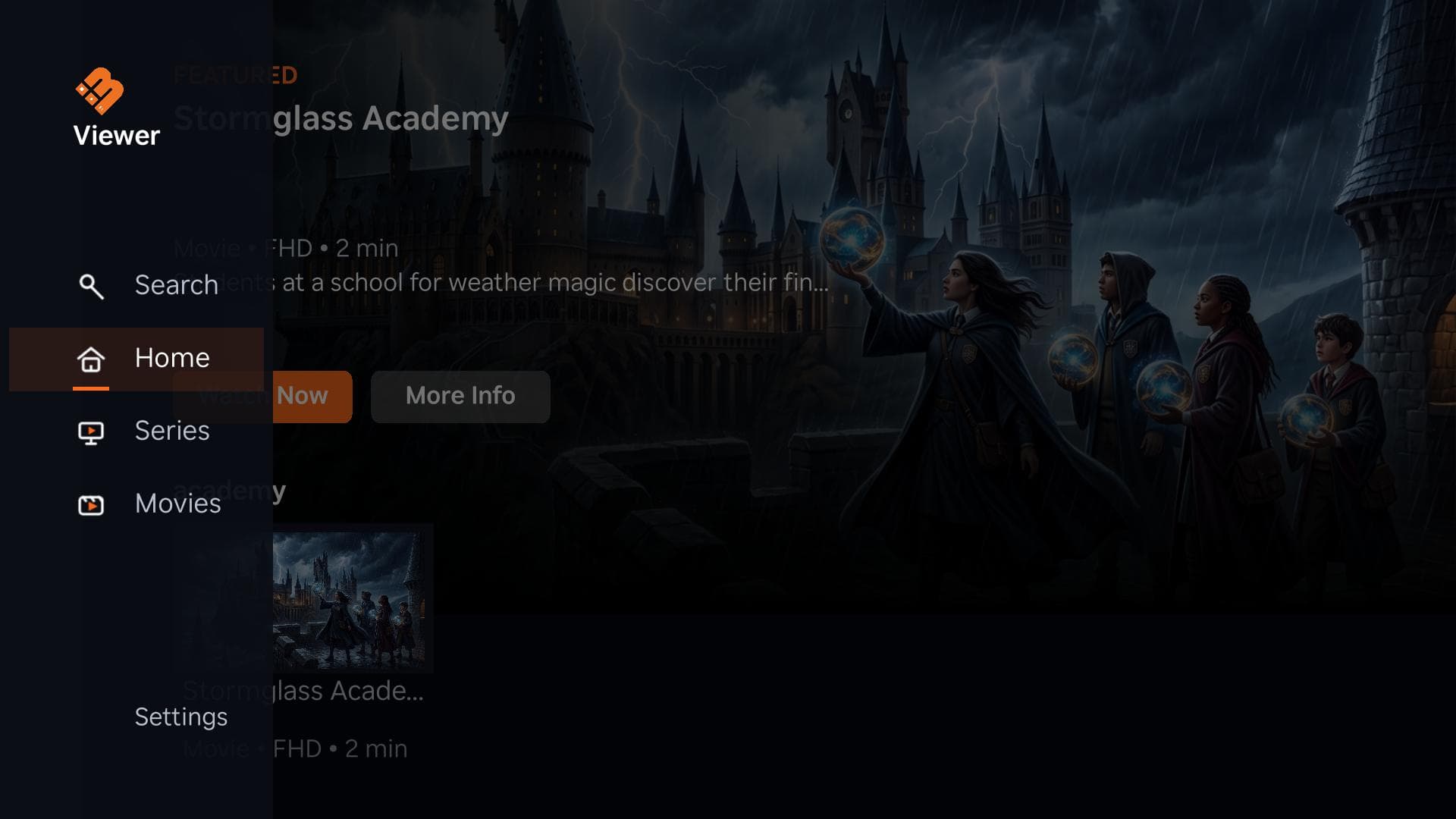
The MediaBlaster Roku Launch Kit follows this model. MediaBlaster runs in WordPress, where you organize videos, series, episodes, artwork, categories, metadata, and app settings. The Roku app source connects to that library. You still need to manage your WordPress hosting, video delivery, testing, and app changes, but you are not renting the app foundation from a hosted platform.
3. Custom Roku app development
Custom development means a Roku developer or team designs and builds the app around your exact requirements. That can include an unusual browsing model, a proprietary membership system, an existing API, a complex live experience, custom advertising, advanced personalization, or a design system that must work in a very specific way.
It offers the greatest flexibility, but it also requires a clear scope, a realistic budget, and an agreement about ownership and maintenance. “Custom” does not automatically mean you receive the source code, control the developer account, or get future updates included. Those points belong in the contract.
Compare the decisions that matter
Ownership and account control
Ask who owns the Roku developer account, source repository, content backend, hosting accounts, analytics accounts, artwork, and vendor relationships. The cleanest arrangement for a brand building a long-term channel is usually to own the accounts that make the channel function, even if an agency or developer does the work.
With a hosted builder, the vendor operates more of the stack. With a source template, you have the files and can select your providers. With custom development, ownership depends on the agreement. Roku’s developer program allows publishers to develop and publish apps through their own account, so do not treat account ownership as a minor detail.
Customization
Hosted builders are best when the vendor’s layouts and features already match your needs. Source templates are strong when the app needs a branded look, changes to navigation, content rows, copy, artwork treatment, integrations already supported by the foundation, or future developer-led modifications. Custom development is justified when the differentiating feature cannot be safely adapted from a template.
A good test is to write down the three things viewers must be able to do that a normal video app cannot. If the answer is vague, do not start with a blank custom project. If those requirements are concrete and central to the business, custom scope may be the honest answer.
Maintenance
Every path needs maintenance. Content needs to be added and corrected. Playback providers, WordPress plugins, APIs, Roku requirements, and operating systems change. A hosted platform performs more of that platform work, but you remain dependent on its release schedule. A source template gives you more control and more responsibility. A custom app needs a named owner for bug fixes, upgrades, monitoring, and future feature work.
Plan maintenance before launch. Decide who handles content operations, who monitors playback failures, who tests an update on physical Roku devices, and what happens if a required dependency changes. The cost of an app is not only the build. It is the cost of keeping the experience dependable.
Cost and technical skill
Hosted builders often shift more cost into recurring platform fees. Source-code templates shift more effort to setup and selected technical help, while avoiding the cost of building routine screens and data connections from zero. Custom development has the largest upfront planning and engineering component, plus ongoing maintenance.
The most useful question is not “Which option is cheapest?” It is “What cost and responsibility am I choosing over the next two or three years?” Use the OTT cost calculator to model your own assumptions instead of relying on generic price comparisons.
Which option should you choose?
Choose a hosted builder if you want a vendor-managed route, have limited technical support, and can work within a defined feature set.
Choose a source-code template if you want WordPress at the center, want access to the app foundation, can follow a guided setup process or hire targeted help, and want a practical balance of ownership and speed.
Choose custom Roku development if the app needs a genuinely distinctive product feature, complex integration, or specialized business logic that a template does not cover.
Start with the smallest honest path
For many video-first organizations, the first Roku release does not need to solve every future platform problem. It needs a coherent library, reliable playback, simple navigation, strong artwork, clear metadata, and a publication plan. Start with the route that gets those basics live without forcing you into an operating model you will regret later.
If you want a WordPress-connected app foundation, review the Roku Launch Kit. If your project needs hands-on technical work, discuss a scoped Roku development service before assuming a template or a fully custom build is the right fit.
Frequently asked questions
Can a Roku app builder create a custom Roku app?
A builder can create a branded app within its supported configuration options. It is not the same as a fully custom application with unrestricted code, architecture, and feature choices.
Do I need to know BrightScript to use a source-code template?
Not necessarily for a standard setup, but comfort with developer tools helps when you want to change the app beyond documented options. You can also use a developer for specific modifications instead of commissioning a complete app from scratch.
Can I publish a Roku app through my own account?
Yes. MediaBlaster’s source-code workflow is designed for you to package and submit through your own Roku developer account. Roku’s current publishing guide explains the public-app submission process.